
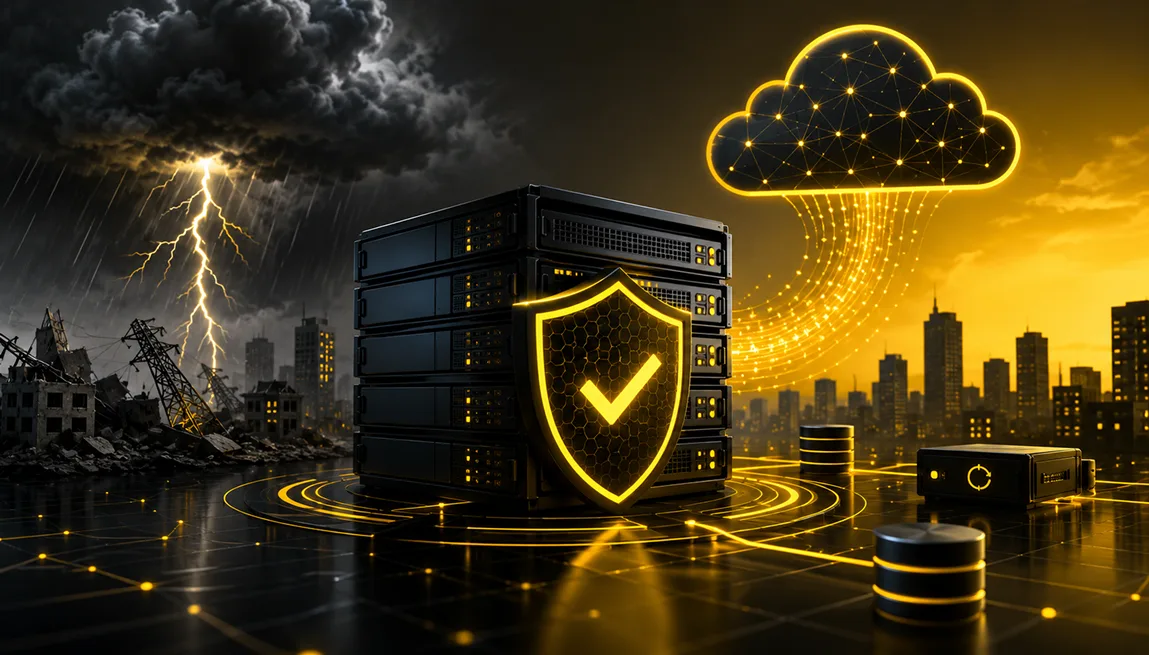
HCI for Disaster Recovery & Business Continuity

Rear-Door Heat Exchangers_ The Bridge Technology Powering UAE Data Centers
Table of Contents
Every business depends on its data, applications, and systems to keep daily operations running. When unexpected events happen, such as hardware failures, cyberattacks, power outages, or natural disasters, businesses can face serious disruptions. Even a short period of downtime can affect customer trust, employee productivity, and company revenue.

This is where Hyper Converged Infrastructure, commonly known as HCI, becomes valuable. HCI helps businesses keep their systems available and recover quickly when problems occur. It combines important IT resources into a single platform, making management easier and recovery faster. As companies look for better ways to protect their operations, HCI has become a practical solution for disaster recovery and business continuity planning.

Understanding Disaster Recovery and Business Continuity

Before looking at how HCI helps, it is important to understand these two concepts. Disaster recovery focuses on restoring data, applications, and systems after an unexpected event. The goal is to get operations back up and running as quickly as possible.

Business continuity takes a broader view. It focuses on keeping critical business activities running during and after a disruption. This includes people, processes, technology, and communication. Both disaster recovery and business continuity work together. Businesses need strong recovery plans to reduce downtime and continue serving customers without major interruptions.

What is Hyper Converged Infrastructure?

Hyper Converged Infrastructure is a modern IT architecture that combines computing, storage, networking, and virtualization into one integrated system. Traditional IT environments often use separate systems for storage, servers, and networking. Managing these different components can be complex and time consuming.

HCI brings everything together into a unified platform. IT teams can manage resources from a single interface rather than working across multiple systems. This simpler structure helps businesses respond faster to challenges and maintain greater control over their technology environment.

Why Traditional Recovery Methods Can Be Challenging

Many organizations still rely on traditional disaster recovery systems. While these methods can work, they often come with several challenges.They may require separate hardware at multiple locations.

They can be expensive to maintain.Recovery processes may involve several manual steps. Scaling the infrastructure often requires additional investments and planning. Managing multiple systems can increase the chance of errors during critical situations.

As businesses grow, these challenges can become more difficult to handle. Organizations need solutions that are easier to manage while still offering strong protection.

How HCI Supports Disaster Recovery

One of the biggest strengths of HCI is its ability to simplify disaster recovery. Data can be replicated between different locations. This means important information is copied and stored safely outside the primary site.

If a system failure occurs, businesses can quickly switch to the backup environment and continue operations. Many HCI platforms support automated recovery processes. This reduces the need for manual intervention and helps teams respond faster during emergencies.
Because all resources work together within a single platform, recovery tasks become easier to manage and monitor. The result is shorter downtime and faster restoration of business services.

Faster Recovery Times

When a disruption happens, every minute matters. Customers expect services to remain available. Employees need access to applications and data to continue their work.
HCI helps reduce recovery times by keeping data and workloads ready for restoration. Instead of rebuilding systems from scratch, businesses can quickly recover applications and virtual machines from backup copies.
This faster recovery helps minimize operational disruptions and reduces financial losses caused by downtime. For many organizations, speed can make the difference between a minor issue and a major business problem.

Improved Data Protection

Data is one of the most valuable assets a business owns. Losing important business information can affect customer relationships, regulatory compliance, and future growth. HCI helps protect data through built-in backup, replication, and storage management features.

Data can be stored across multiple nodes within the infrastructure. If one component fails, information remains available through other nodes. This added layer of protection helps businesses reduce the risk of permanent data loss. Strong data protection also gives leadership teams greater confidence when planning for unexpected events.

Easy Scalability for Growing Businesses

Business needs change over time. A company that starts with a small infrastructure today may require much larger resources in the future.
Traditional environments often require major upgrades when growth occurs. HCI offers a simpler approach. Organizations can add new nodes as needed without redesigning the entire infrastructure.
This flexibility makes it easier to expand storage capacity, computing power, and recovery resources. Businesses can grow at their own pace while maintaining strong disaster recovery capabilities.

Simplified Management

Managing complex IT systems can place significant pressure on technology teams. When multiple platforms are involved, troubleshooting and maintenance become more difficult.
HCI simplifies daily management through centralized control. Administrators can monitor performance, manage resources, and handle recovery tasks from a single dashboard.
This saves time and helps reduce operational complexity. IT teams can focus more on business priorities instead of spending excessive time managing infrastructure components.

Cost Benefits of HCI

Cost is an important consideration for every organization. Traditional disaster recovery environments often require duplicate hardware, additional software, and separate management tools.
HCI can help lower these expenses by combining multiple functions into one platform. Organizations may reduce hardware requirements, simplify licensing, and lower maintenance costs. The ability to scale gradually also helps businesses avoid large upfront investments. Over time, these savings can support other strategic technology initiatives.

Supporting Long Term Business Continuity

Business continuity is not only about recovering from disasters. It is also about maintaining stability during everyday challenges. HCI helps organizations build resilient environments that support continuous operations.
With better availability, faster recovery, and stronger data protection, businesses can continue serving customers even when unexpected events occur. A well planned HCI environment helps companies remain productive, competitive, and prepared for future challenges.
This long term resilience is becoming increasingly important in today’s digital business landscape.

Conclusion

Unexpected disruptions can happen at any time. HCI helps businesses reduce downtime, protect data, simplify management, and recover faster. With a modern recovery strategy, organizations can stay operational and maintain customer trust during unexpected challenges.
Ready to strengthen your disaster recovery strategy? Partner with GoData Global to build a reliable HCI environment that protects critical systems, reduces downtime, and supports long term business continuity and growth.
Godataglobal | Enquire now