Arista vs Cisco Nexus for Data Centre Switching: Which Is Right for You?

Arista-vs-Cisco-Nexus-for-Data-Centre-Switching-Which-Is-Right-for-You
Table of Contents

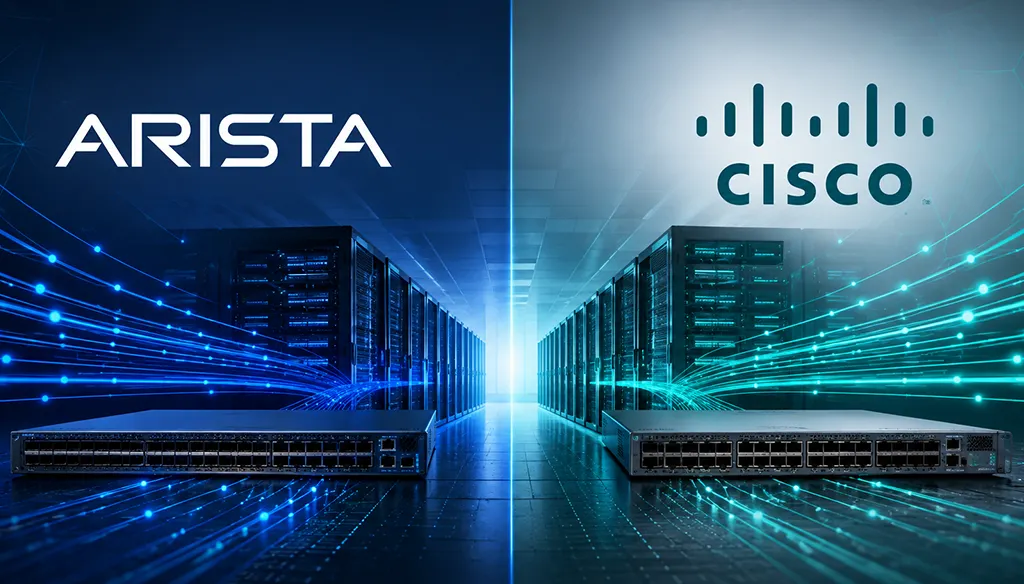
Choosing the right data centre switch can affect network speed, uptime, management, and future growth. Two names often considered for modern data centre networks are Arista and Cisco Nexus. Both have strong platforms, but they take different approaches to network management, automation, hardware, and operations.

The right choice depends on what your data centre needs today and where you expect it to go. A smaller environment may value simple management and lower operating effort, while a large cloud or enterprise network may need advanced automation and scale. This guide compares Arista and Cisco Nexus across the areas that matter most.

Arista vs Cisco Nexus: At a Glance

Arista and Cisco Nexus are both built for demanding data centre environments. They support high-speed switching, automation, virtual networks, and modern data centre designs.
Arista uses EOS (Extensible Operating System) across its switching platforms. Cisco Nexus uses NX-OS, which is designed specifically for data centre networking. Both can support leaf-spine architectures, high-speed Ethernet, Layer 2 and Layer 3 networking, and data centre automation.
The difference often comes down to how your team prefers to operate the network, the existing technology in your business, and the features you need.
Area
Arista
Cisco Nexus
Operating system
EOS
NX-OS
Automation
Strong
Strong
Data centre networking
Excellent
Excellent
Cloud-scale networks
Strong choice
Strong choice
Cisco ecosystem
Limited

Excellent

Network programmability
Strong

Strong

Existing Cisco environment
May require changes
Natural fit
Management tools
Arista-focused tools
Broad Cisco ecosystem

Network Performance

Performance is one of the first things to consider when choosing a data centre switch. Arista offers switches designed for high-speed data centre traffic. Its platforms support high port densities and speeds suited to demanding workloads such as cloud computing, AI, storage, and large-scale applications.
Cisco Nexus also offers high-speed switching platforms for enterprise and cloud data centres. Depending on the model, organisations can choose different port speeds and hardware configurations. In real-world use, the better choice is not simply the switch with the highest advertised speed. Port requirements, traffic patterns, uplinks, latency, oversubscription, and workload demands all matter.

Arista EOS vs Cisco NX-OS

The operating system plays a major role in daily network work. Arista EOS is built around a common software architecture across many Arista platforms. This can make it easier for network teams to use similar methods when managing different switches.
EOS also has strong support for automation and programmability. Teams can use APIs and automation tools to manage network tasks instead of handling every change manually. Cisco NX-OS is designed for data centre environments and has a long history in enterprise networking. It supports features used in large and complex networks.
If your team already works with Cisco products, NX-OS may feel more familiar. If you want a consistent software approach across Arista switches, EOS is worth considering.

Scalability for Growing Data Centres

A switch should not only fit your current network. It should also support your next stage of growth. Arista has a strong position in large-scale cloud and data centre networks. Its product range covers different network sizes and speeds, which can help organisations build networks that grow over time.

Cisco Nexus also supports large enterprise and cloud environments. Its broad product portfolio gives organisations several options as network requirements increase.

For either vendor, planning matters. Look at the number of servers, expected traffic growth, rack count, uplink speeds, redundancy needs, and future application requirements before choosing a platform.

Automation and Network Management

Modern data centres can have hundreds or thousands of network devices. Managing every switch manually can take too much time and can lead to mistakes.

This is an area where both Arista and Cisco have strong capabilities. Arista EOS supports automation through APIs and common automation frameworks. CloudVision can help teams manage, monitor, and automate parts of the network from a central platform.
Cisco offers tools such as Cisco Nexus Dashboard and other management and automation options within its wider ecosystem. The better choice depends on your existing tools and your team’s skills. A network that is easy for your engineers to operate is often more valuable than a feature list filled with capabilities nobody uses.

VXLAN and EVPN Support

Modern data centres often use VXLAN and EVPN to build scalable Layer 2 and Layer 3 networks. Both Arista and Cisco Nexus support these technologies.
VXLAN can help extend network segments across a larger data centre fabric. EVPN helps control how traffic and network information move through that fabric. For organisations building a leaf-spine architecture, support for VXLAN and EVPN is an important consideration.
However, implementation details vary between platforms. Network teams should review the exact switch model, software release, feature support, and design before making a decision.

Security

Security is another major part of data centre switching. Arista switches include security features that can help control network access, monitor traffic, and protect network infrastructure. Its ecosystem can also connect with security and monitoring tools.

Cisco Nexus provides security features alongside the wider Cisco security portfolio. This can be useful for businesses already using Cisco security products and management systems.
Think beyond the switch itself. A secure data centre needs proper access controls, segmentation, monitoring, software updates, backup plans, and clear operating procedures.

Ease of Management

Network teams spend a lot of time troubleshooting, changing configurations, checking performance, and responding to alerts. The management experience matters.
Arista is often recognised for its consistent EOS approach and automation-friendly design. CloudVision can also give teams a central view of network health and configuration.
Cisco Nexus offers familiar Cisco workflows and a wide range of management options. For an organisation already using Cisco networking, this can reduce the learning curve.The simplest platform is usually the one your team already understands well.

Cost and Total Ownership

The purchase price is only one part of the cost. You should also consider software subscriptions, support contracts, management tools, maintenance, training, power use, upgrades, and engineering time.
Arista may be attractive for organisations looking for high-performance switching with a focused data centre networking approach.
Cisco Nexus can make strong financial sense when a company already has a large Cisco environment. Existing skills, tools, support agreements, and operational processes can reduce the cost of moving forward with Cisco. Always compare the total cost of ownership, not just the switch price.

Arista vs Cisco Nexus for AI and High-Performance Workloads

AI and high-performance computing are changing data centre network requirements. AI clusters can create heavy traffic between servers and GPUs. This makes bandwidth, latency, port density, congestion management, and network design especially important.

Arista has invested heavily in high-performance data centre and AI networking. Cisco Nexus also has platforms designed for demanding data centre workloads.

For AI infrastructure, choosing between the two should start with the workload. Look at GPU count, server connections, network speed, east-west traffic, storage traffic, congestion requirements, and future expansion.

Which Should You Choose?

There is no single winner for every data centre.

Arista may be a good fit if you:

  • Want a strong focus on data centre switching
  • Need extensive automation
  • Are building a large leaf-spine network
  • Want a consistent EOS operating model
  • Are planning cloud, AI, or high-performance workloads

Cisco Nexus may be a good fit if you:

  • Already use Cisco networking
  • Have engineers experienced with Cisco platforms
  • Want to work within a broad Cisco ecosystem
  • Need established enterprise data centre features
  • Want to connect your switching strategy with existing Cisco technologies
The final decision should come from your network design, workload, team skills, existing infrastructure, and growth plans.

How GoData Global Can Help

Choosing between Arista and Cisco Nexus is easier when the decision starts with the network rather than the brand. A proper assessment can look at your current infrastructure, traffic requirements, application needs, security controls, automation goals, budget, and future expansion.

GoData Global can help businesses assess their data centre requirements and plan infrastructure around their operational goals. The right design can make the network easier to manage today while giving your business room to grow tomorrow.

Conclusion

Arista and Cisco Nexus are both strong choices for data centre switching. Arista stands out for its EOS platform, automation approach, and strong position in large-scale data centre and AI networks. Cisco Nexus is a natural choice for many enterprises already invested in the Cisco ecosystem. The best option depends on your workloads, network design, team skills, existing infrastructure, and budget. Rather than choosing a switch based only on specifications, look at the complete operating picture. A well-planned network can improve performance, simplify management, support security, and give your data centre a stronger foundation for future growth.

Need help choosing the right data centre switching platform? Contact GoData Global to discuss your infrastructure, performance, automation, and growth requirements with a technology team that can guide your next step.

Godataglobal | Enquire now